
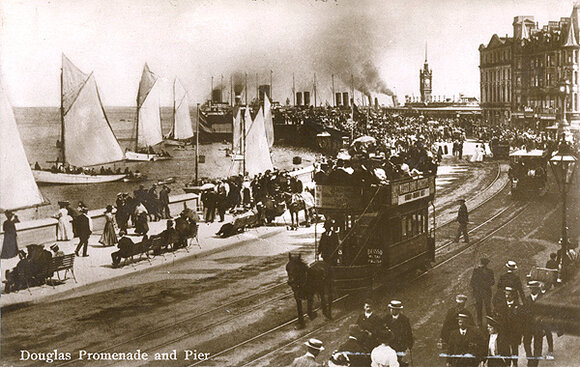
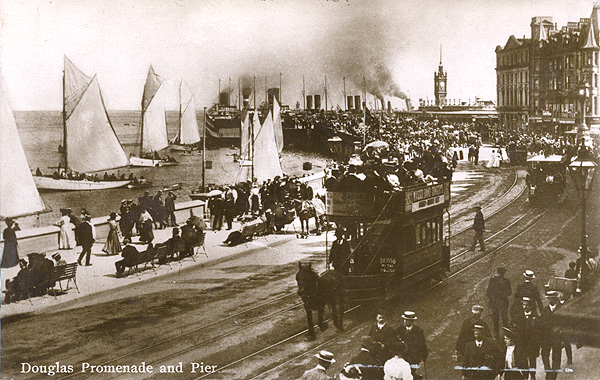
150 years ago today, on 7th August 1876, the world’s longest surviving horse-drawn tramway began plying for passengers along Douglas seafront on the Isle of Man.
This tramway was built and initially operated by Thomas Lightfoot, a retired civil engineer from Sheffield, who had previously won the contract to build Sheffield’s first horse-drawn tramway. After ‘retiring’ to Douglas with his wife and thirteen children, he helped steer the necessary legislation through the island’s parliament, Tynwald, before building, and later extending, the first short single-track section of line along the seafront.
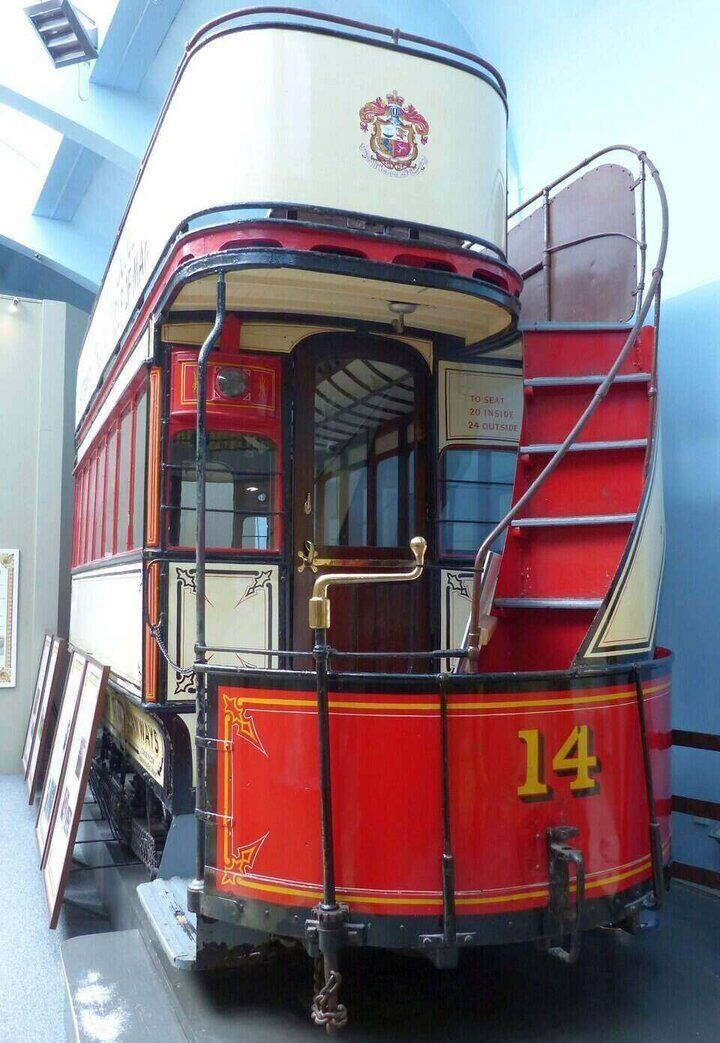
The initial service was operated by a fleet of three tramcars. These were built by Starbuck, the Birkenhead firm that had also supplied Sheffield’s first horse trams. The first of these was an enclosed single decker for winter use (No. 1), together with two open-topped double deckers. No. 1 may well have resembled the National Tramway Museum’s Sheffield horse tram No. 15. The stud of horses was housed in stables also built by Lightfoot at the bottom of Burnt Mill Hill.
After selling the line in 1882 to Isle of Man Tramways Ltd, the 3-foot tramway went from strength to strength. By 1891, a double track line extended along almost the entire length of the 2-mile promenade, complete with passing loops and long crossovers.
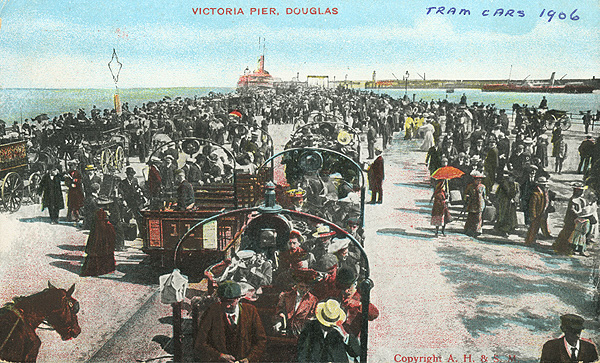
By this stage the fleet had grown to 26 tramcars, fourteen of which were double deckers, while the remaining twelve were open toast racks. Six of the double deck cars were acquired second hand from South Shields Tramway, which went bankrupt and closed in 1886.
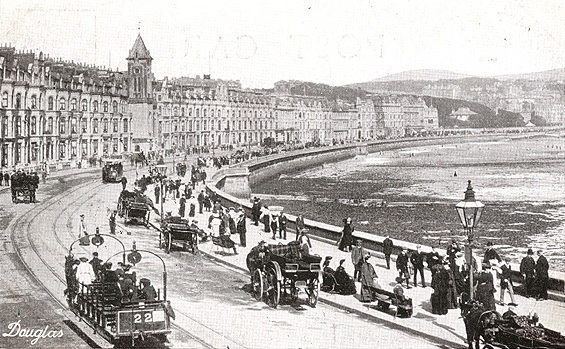
Victorian Douglas was a hugely popular destination for the growing numbers of tourists from mainland Britain. By 1898 the number of passengers carried on the tramway reached a phenomenal 1,620,000. Despite its popularity and operational success, the tramway fell victim to a local banking crash. This resulted in the tramway company going into liquidation, along with many other Manx businesses.
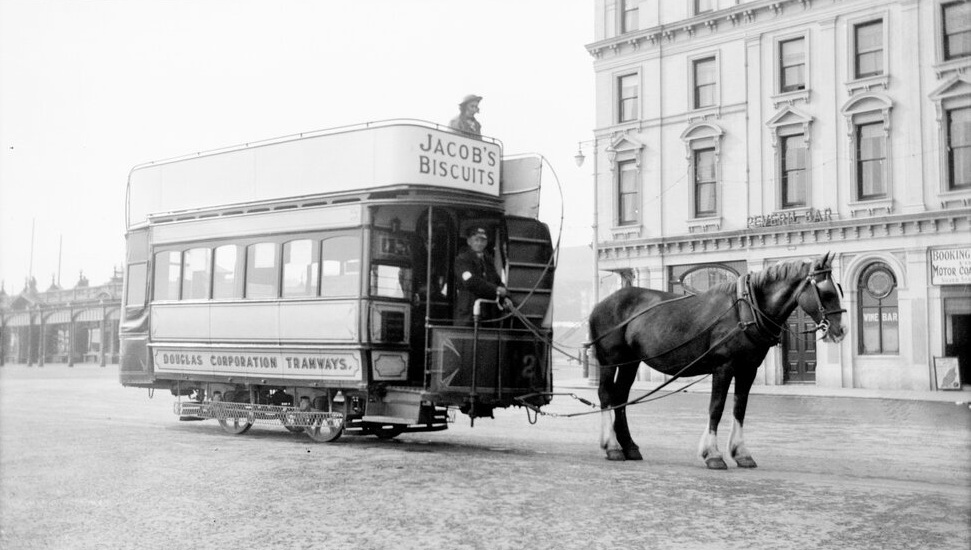
Douglas Corporation came to the rescue, buying both the horse tramway and the Upper Douglas Cable Tramway for the sum of £50,000. At the time of the take-over, on 2 January 1902, the assets included 36 tramcars, a stud of 68 horses, a recently built depot at the Strathallan terminus, together with stables and track.
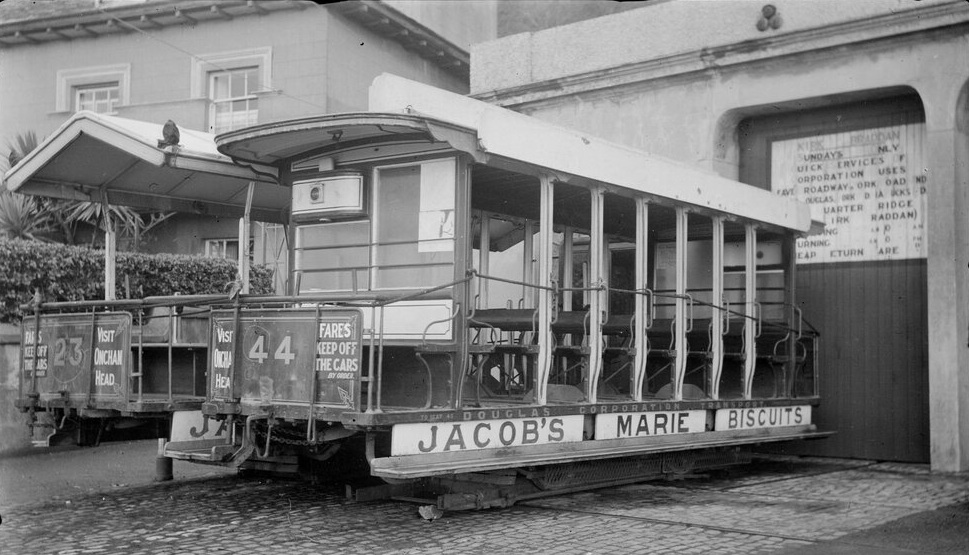
The tramway continued to operate throughout the First World War, and a post-war boom in tourists to the island saw passenger numbers reach staggering new heights, culminating in a record total of 2,750,000 in 1938. This was despite the introduction of competition from omnibuses, which began offering services along the promenade in 1926. It did, however, result in the withdrawal of winter horse tram services in November 1927. Since then, services have mostly been confined to the summer months, apart from occasional special events.
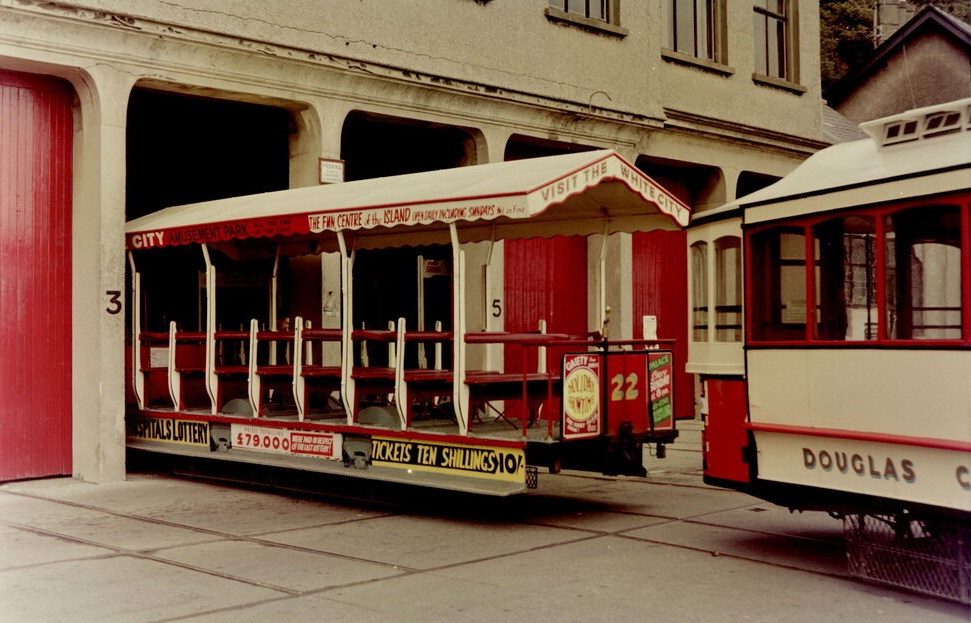
The Second World War resulted in the tramway’s temporary closure for the first time in its history, but services resumed in late May 1946 with the aid of 42 replacement horses that were bought in Ireland. Post-war visitor numbers did not quite match the pre-war tourist boom. However, helped by Royal patronage for the service during a series of visits between 1964 and 1972, passenger numbers revived to over one million in 1974. On 9 August 1976, the tramway celebrated its centenary.
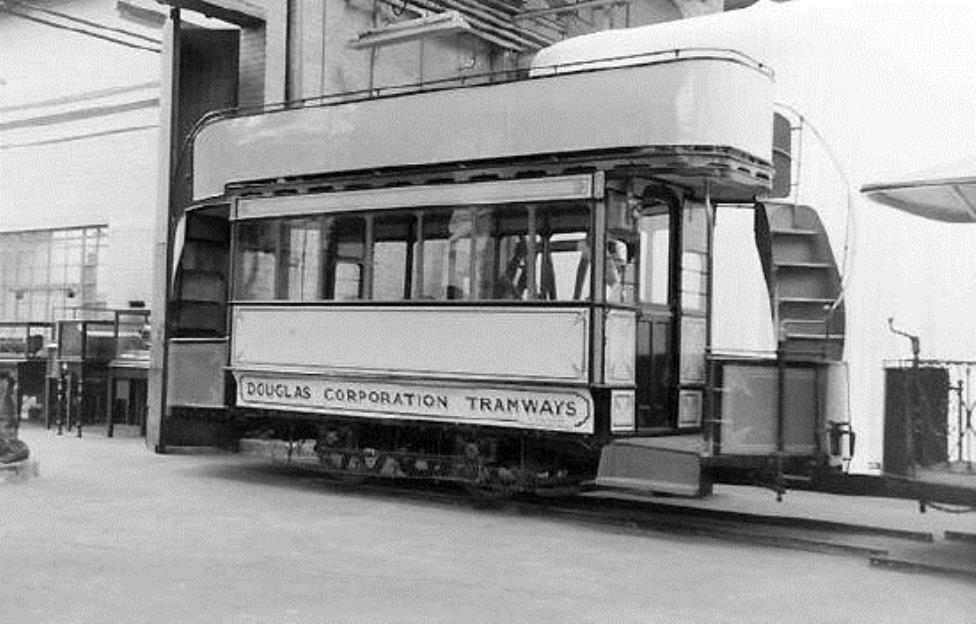
The growth in popularity of more exotic foreign holidays from around that period inevitably diminished the number of visitors to the Isle of Man. This resulted in a decline in passenger revenue, which coincided with a pressing need for capital expenditure on the tramway’s ageing infrastructure, notably its track, stables and depot accommodation.
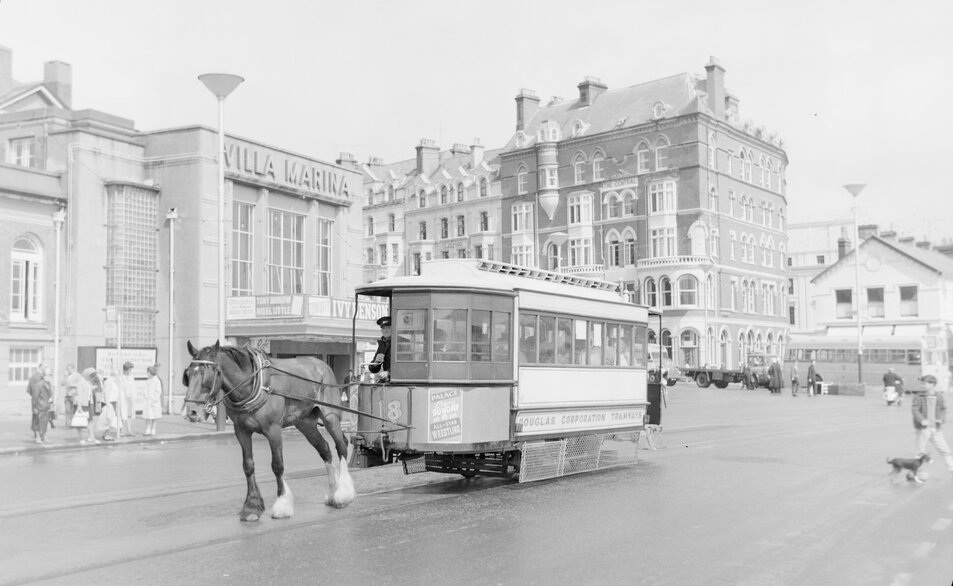
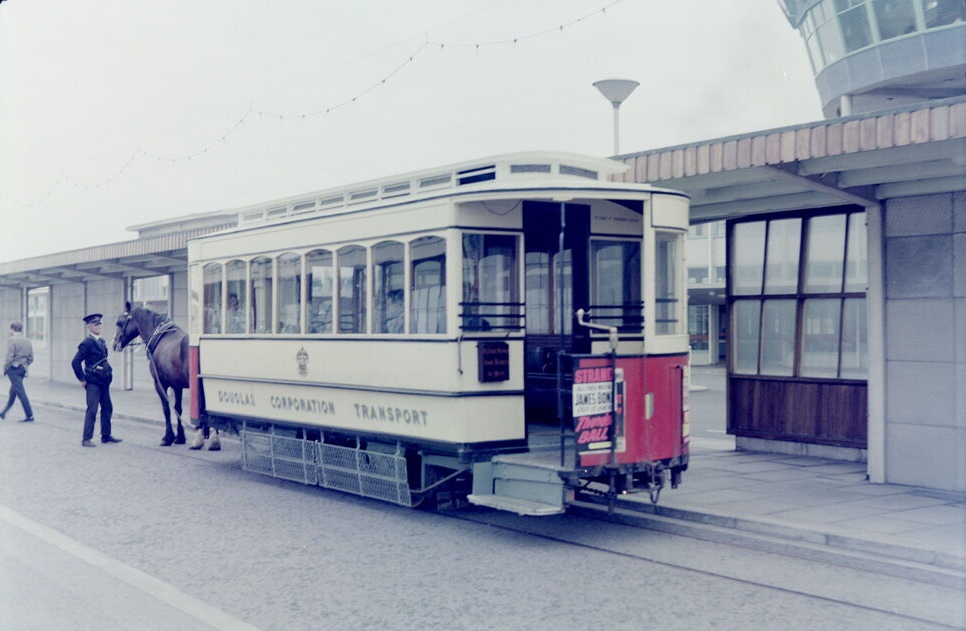
Faced with a tramway deficit of £263,00 during the 2015 operating season, Douglas Corporation announced the closure of the tramway in January 2016 after operating it for 114 years, and almost 140 years since its inception. Fortunately, the Isle of Man government came to the rescue by taking over the operation of the tramway as part of its Heritage Railways Division within the Department of Infrastructure. As part of an ambitious restructuring and refurbishment programme, a new period-style tramcar depot was constructed for the storage and maintenance of the reduced fleet of fourteen historic tramcars (down from 23), several of which have been refurbished or restored.
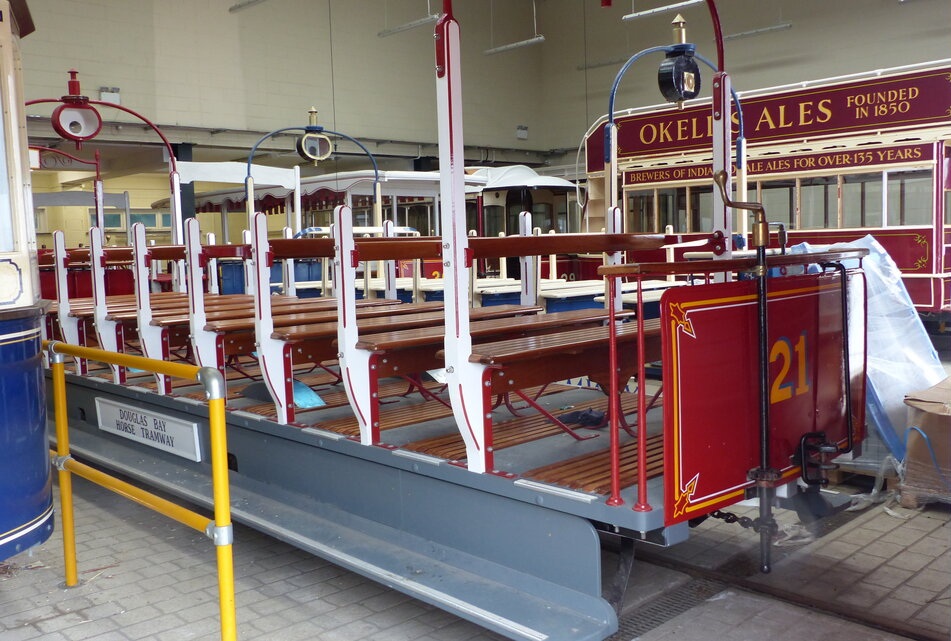
In 2019, work began on a Douglas Promenades Refurbishment Scheme, which involved the removal of the tramway tracks along its entire length with a view to replacing them with heavier duty rail. Various problems were encountered, however, including unexpected foundational issues affecting the roadway. Associated additional costs and overrun of the planned completion date were compounded by the disruptive effects of the Covid-19 pandemic.
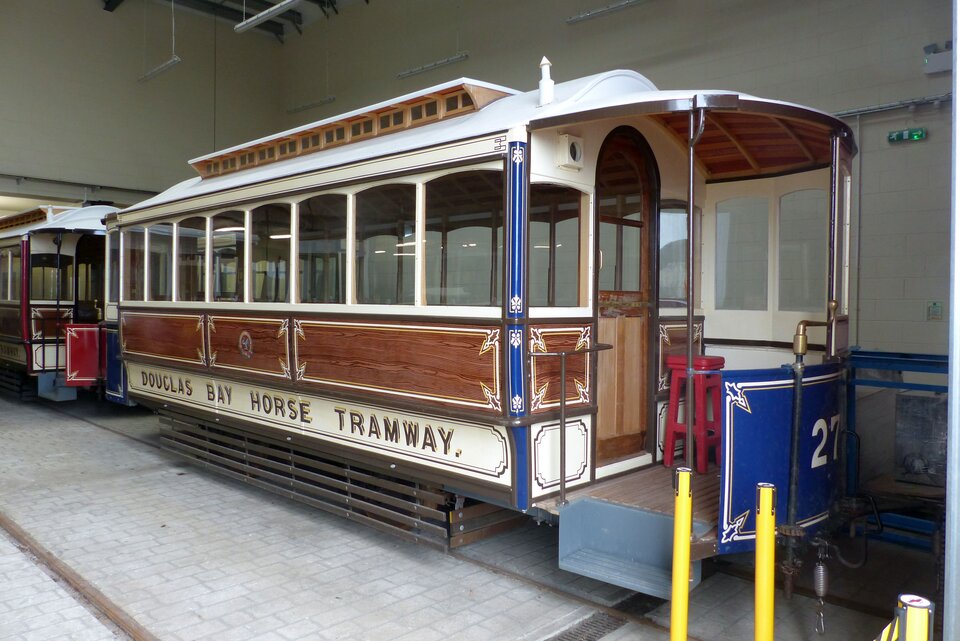
Consequently, it was decided to restrict the scope of the track renewal scheme. It was confined to reinstating the double track layout down the centre of the highway from Derby Castle, along Central and Queens Promenades, but only as far as Villa Marina. This has shortened the length of the tramway from 1.6 miles (2.54 km) to one mile (1.6km). The tramway service on this northern section resumed on 30 July 2022.
The southern section of the project would have continued the tramway along its original length from Broadway to the Sea Terminal by means of a single track running along a dedicated corridor on the seaward side of the Harris and Loch Promenades. This was put on hold due to a lack of funding. In a recent development, Tynwald – the Manx Parliament – approved the release of funding for completion of the original project in a near-unanimous vote in July 2026, following the presentation of a business case supporting the proposal. The business case also estimated that the project should take 40 weeks to complete, meaning that the full tramway might be operational again in 2027: welcome news in its anniversary year!
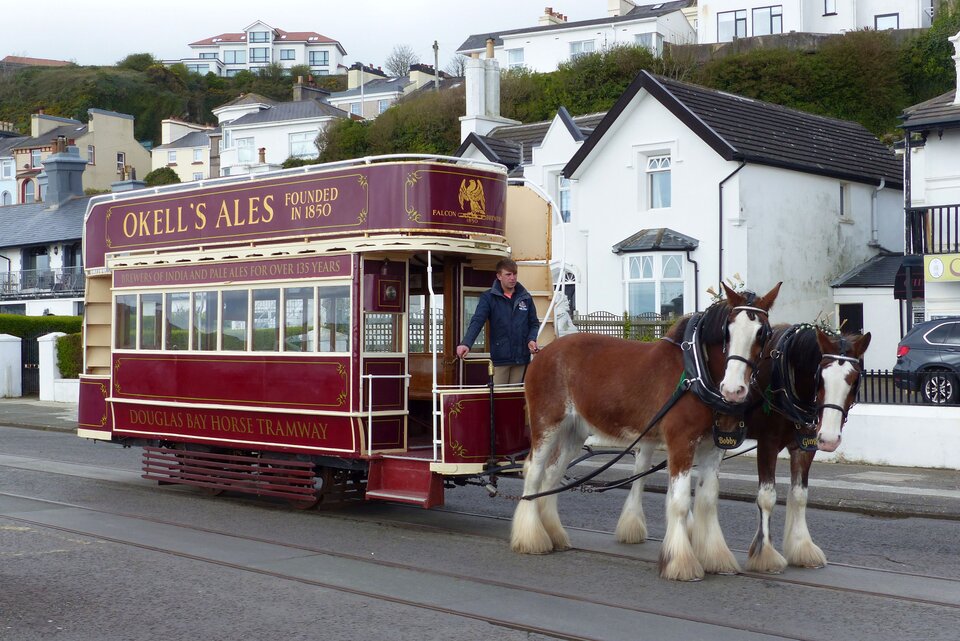
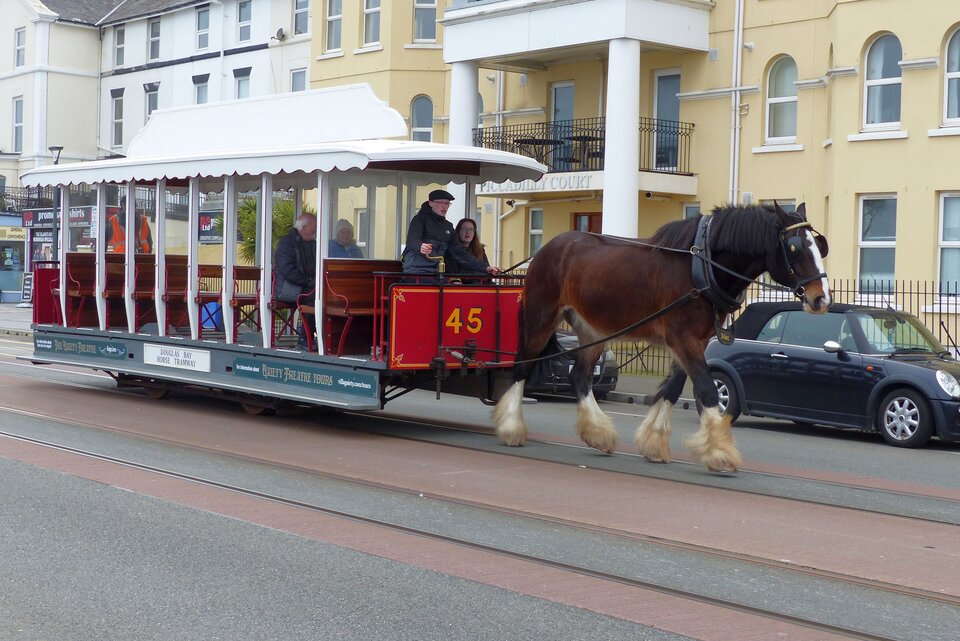
During its impressively long history, a grand total of 51 tramcars has operated on the Douglas Bay Tramway, just under half of which (24) have survived. Fourteen are now owned by the Isle of Man government for use on the tramway, of which six are currently in service and 8 are either undergoing or in need of restoration.
The remaining ten are privately owned, three of which are on public display.
Find out more on the Douglas Bay Horse Tramway website: https://www.dbtht.org/
and the Isle of Man Transport website: https://www.iombusandrail.im/heritage/our-railways/douglas-bay-horse-tramway/
With thanks to Museum volunteer Jim Dignan for producing this article.
Image References:
1 – 9: National Tramway Museum collection
10 – 14: Jim Dignan